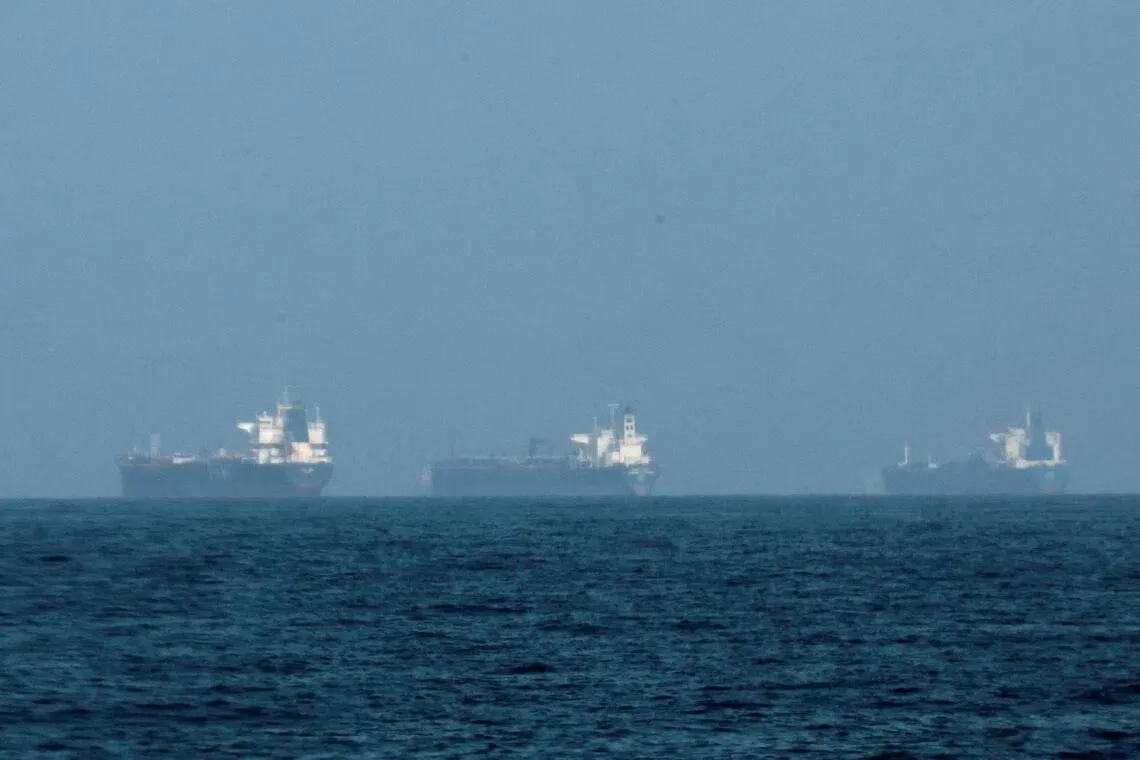
Two things are true at the same time this week. Container ships are flowing through the Suez Canal at the fastest pace since the Red Sea crisis began in late 2023, and a 40-foot box from Shanghai to a Gulf port still costs several times what it did before the Iran war. If you are booking shipping from China to the UAE or Saudi Arabia right now, you have probably seen both headlines and wondered which one applies to your invoice. The honest answer: both, and they are not contradicting each other.
Here is what actually happened in the first week of October 2026, with the numbers behind it.
What changed this week
Three carrier moves landed within days of each other, and together they close the loop on the Suez return story we covered in September.
COSCO and OOCL completed their first westbound Suez transit in more than two years. On 4 October, the 24,188 TEU OOCL Spain passed through the canal on the AEU1/LL1 service from Asia to North Europe. COSCO had been trialling eastbound sailings since mid-September; this was the first fully loaded westbound run. For a carrier of COSCO’s size to commit its biggest vessel class to the waterway is a signal in itself.
Maersk and Hapag-Lloyd moved four more services back to Suez. On 8 October, the Gemini Cooperation confirmed that AE5, AE11, AE12 and ME2 are transitioning from Cape of Good Hope routing to the canal, joining AE15 and AE19 which were already transiting. Six Gemini strings now use Suez. The ME2 loop, which serves India–Europe, cut its first westbound sailing under the new routing on 24 September from Colombo.
The Premier Alliance became the last major grouping to commit. ONE, HMM and Yang Ming announced that two services will return to Suez: the FE1 Southeast Asia–North Europe loop and the IOX/INX Indian Subcontinent–North Europe loop. The 8,110 TEU One Continuity leaves Laem Chabang on 19 October, with its first westbound canal transit scheduled for 9 November. The IOX service starts from Hazira on 22 October, first westbound transit 17 November. Round-trip times drop from 13 weeks to 11 on FE1 and from 13 to 10 on IOX, which gives you a sense of how much sailing time the Cape diversion was adding.
| Carrier / alliance | Services now on Suez | First key sailing |
|---|---|---|
| Maersk & Hapag-Lloyd (Gemini) | AE15, AE19, AE5, AE11, AE12, ME2 | AE5 resumed 21 Sep; ME2 westbound from Colombo 24 Sep |
| MSC | Jade, Albatros, Himalaya, Tiger, Indusa (westbound) | From 24 August, service by service |
| CMA CGM & OCEAN Alliance partners | Selected Asia–Europe and Mediterranean loops | Several FAL services, mainly eastbound first |
| COSCO & OOCL | AEU1/LL1 plus eastbound trials | OOCL Spain westbound, 4 October |
| ONE, HMM, Yang Ming (Premier Alliance) | FE1, IOX/INX | One Continuity departs Laem Chabang 19 October |
The September numbers are striking
Lloyd’s List Intelligence counted 314 containership crossings of the Bab el-Mandeb Strait in September, up 14.6% from August and 64.4% higher than September 2025. That is the highest monthly total since the Houthi attacks began. The growth came from bigger ships: vessels of 7,000 TEU and above accounted for 124 movements, and most of the month-on-month increase.
Week 39 Suez transits ran 68% above the same week last year, according to the canal data circulating in early October. Linerlytica estimates that more than 140 containerships with a combined capacity above 2 million TEU have switched from Cape routing back to Suez since May. The share of global capacity still diverting around Africa has fallen to 4.6%. Maritime Strategies International puts Red Sea usage at roughly 35% of Asia–Europe sailings as of 1 October. Drewry’s base case now has container transits reaching about 80% of pre-diversion levels by February 2027.
One detail worth knowing: 139 of September’s Bab el-Mandeb passages, or 44.3%, were “dark” transits with AIS transponders switched off, and 108 of those involved ships of 7,000 TEU or more. Analysts read that as major carriers testing the route quietly before putting their own names on customer advisories. It is working: insurance underwriters have started trimming Red Sea war-risk premia from their March peaks, though not to pre-crisis levels. Our war risk insurance guide tracks where those premiums stand.
So why is your China–Gulf quote still high?
Because the Suez Canal is not your bottleneck. The Strait of Hormuz is.
Every number above describes the Red Sea and the canal. Your cargo to Jebel Ali, Dammam, Doha, Bahrain or Kuwait does not stop there. It has to pass through Hormuz, and Hormuz has not recovered. Commercial container transits through the strait were running at a handful per week in late September; one widely cited count logged a single commercial transit on 20 September, against a pre-crisis norm of roughly 85 vessels a day. That is not a slowdown. It is a closure with exceptions.
Carriers have priced accordingly. Maersk’s Middle East Operational Update 51, published 8 October, keeps two charges in force for Gulf-bound cargo:
| Charge | Amount | Applies to |
|---|---|---|
| Hormuz transit fee | USD 1,000 per container | Any container on a vessel transiting the Strait of Hormuz |
| Emergency freight rate | USD 1,800 per 20ft dry | Cargo loading from or destined to Iraq, Kuwait, Saudi Arabia (Dammam & Jubail), Bahrain, Qatar, UAE, Oman except Salalah |
| Emergency freight rate | USD 3,000 per 40ft dry | Same scope |
| Emergency freight rate | USD 3,800 per box | Reefer, special equipment and dangerous goods |
Other lines use different names and different amounts, but the pattern repeats. If you are comparing quotes and one forwarder’s number looks suspiciously cheap, check whether it includes these line items. Our breakdown of PSS, WRS and redirection fees explains what each surcharge is supposed to cover.
The rate indices confirm the split. The Drewry World Container Index stood at USD 4,434 per 40ft box on 1 October, but almost all of its recent decline came from Asia–Europe. On the Gulf lane, the Shanghai Containerized Freight Index printed USD 6,489 per TEU from Shanghai to Persian Gulf base ports on 30 September, down only 1.5% on the week, and the week before that the Gulf route was the only major SCFI lane that rose, gaining 5.4%. While Europe rates soften as Suez capacity returns, Gulf rates are holding because the constraint never was the canal.
Timing makes October worse, not better
China’s Golden Week (1–7 October) emptied the factories just as carriers were restructuring their networks around the Suez return. The result is a messy transition window:
- Blank sailings around the holiday cut effective capacity on several Asia–Gulf strings, and Shanghai’s on-time berthing fell to 12% in August, so schedules are starting from a fragile base. See our port congestion update for the full picture.
- Carriers have filed higher FAK rates for the second half of October after the holiday. Whether they hold depends on post-Golden-Week demand, but do not budget October cargo at September’s spot levels.
- Crews and insurers still treat the southern Red Sea as a live risk zone. Every restored Suez service carries a conditional clause allowing a quick return to the Cape if conditions deteriorate, and the Houthis still hold Yemen’s Red Sea coast. Treat any “Suez is back” announcement as reversible until it survives several months without incident.
What this means for your next booking
The practical picture for a GCC importer is simpler than the headlines:
- Suez recovery helps Asia–Europe first. Your China–Gulf transit times improve only when the carriers serving Gulf ports normalise, and that depends on Hormuz, not Suez.
- Ports outside Hormuz keep their advantage. Jebel Ali, Dammam, Doha, Manama and Shuwaikh all sit inside the strait. Fujairah and Salalah sit outside it. If your delivery schedule has slack, routing through Salalah or Fujairah and finishing by land or short sea leg can still dodge the worst of the Hormuz charges. We covered the Fujairah option in detail when the Hormuz risks first spiked, and it remains relevant.
- Get the routing in writing. Ask your forwarder to confirm the vessel name, the canal it will transit, and every surcharge that applies, at booking time and again a week before loading. Routes are changing service by service, and two bookings on the “same” service can sail different ways in the same month.
- Do not chase the bottom. Rates on the Gulf lane are firm for a structural reason. Waiting for a collapse that depends on Hormuz reopening is a bet on geopolitics, not on the shipping market.
GCC Freight runs weekly sailings from Shenzhen, Guangzhou, Ningbo and Shanghai to Jebel Ali, Dammam, Sohar, Hamad and beyond, and we confirm routing and surcharges in writing before every booking. If you are planning Q4 shipments, now is the time to lock space before the post-Golden-Week rush and the mid-October FAK increases collide.
- WhatsApp: Get a quote now